Most businesses running a gift card program already own the infrastructure for store credit and never use it. Same ledger, same codes, same redemption path at the till. The only thing that changes is who initiates it and why.
That unused capability is worth more than it sounds. Every cash refund you process is revenue leaving the business permanently, and every goodwill gesture settled in cash is the same. Converting some of those moments into credit costs you nothing to build if the gift card plumbing is already there.
What does omnichannel store credit actually mean?
Store credit is a balance you issue to a customer rather than one they buy. Omnichannel store credit is that balance working everywhere you trade (the shop floor, your online store, a second venue on a different till) from one canonical number that updates in real time wherever it is spent.
The distinction sounds academic until a customer tries to spend credit issued in store on your website and finds it does not exist there. At that point you have not given them credit. You have given them a voucher for one specific building, and they will discover the limitation at the least convenient moment.
For the conceptual comparison between the three instruments (cash gift cards, store credit, and experience vouchers) there is a full breakdown in gift cards vs store credit vs experience vouchers. This piece is about the operational side: when to reach for credit, and what has to be true for it to work.
When should you issue credit instead of a cash refund?
Not always, and this is where businesses get it wrong in both directions. A customer who is genuinely unhappy and has asked for their money back should get their money back. Pushing credit on someone in that position buys a short-term number and a long-term problem, and in many jurisdictions you do not have the choice anyway: consumer law decides, not your policy.
The situations where credit genuinely suits both sides are narrower:
| Situation | Cash refund | Store credit |
|---|---|---|
| Change of mind, within your returns policy | Revenue gone, customer may not return | Usually welcomed. They were choosing to shop with you |
| Wrong size or colour, wants a replacement | Unnecessary. They intend to buy again | Natural fit, and faster at the counter than a refund-then-repurchase |
| Service recovery after a mistake you made | Feels like a settlement | Feels like an invitation back, and usually lands better |
| Cancelled booking inside policy | Revenue gone, slot unsold | Keeps the revenue and the relationship |
| Faulty goods, or a customer who asked for a refund | The correct answer | Do not do this. Often unlawful, always corrosive. |
Credit works when the customer already wanted to be your customer. It fails when it is used to avoid honouring an obligation, and customers can tell the difference immediately.
Does anyone actually redeem store credit?
Considerably more reliably than gift cards do, which surprises people. A gift card is often given to someone who has never bought from you and may not know what you sell. Store credit goes to someone who has already chosen you once and usually has a specific replacement in mind.
For merchants using Wrapped with Loop Returns to convert refunds into credit, the typical lift is over 80% redemption. And across Wrapped merchants, customers spend on average 2–3x the value of the card when they redeem it: so a credit balance frequently returns more than the refund would have cost you.
That said, redemption rate is the number to watch here rather than issuance. Credit that is issued and never spent has not saved you anything. It has moved a cash outflow into a liability on your balance sheet and annoyed a customer.
What breaks when credit only works on one channel?
Everything the customer notices. The failure is always the same shape: the credit was issued where the problem happened, and the customer tries to use it where it is convenient. Issued at the counter, tried on the website. Issued by the online support team, tried at the till.
What follows is a staff member who cannot help, a manual workaround if you are lucky, and a customer whose service-recovery gesture has become a second service failure. Nodo described exactly this before moving to Wrapped, staff voiding balances and reissuing by hand to transfer value between systems, which they called slow, clunky and inefficient. That is the tax you pay for per-channel balances.
The fix is structural rather than procedural: one shared balance that every connected channel reads and writes. Not a balance mirrored between systems, which drifts, but a single number. Retail operators can see how this is set up on the retail solutions page.
How do you set it up?
If you already issue gift cards through a platform that supports store credit, this is mostly a policy exercise rather than a technical one:
- Decide the situations where staff may issue credit, and the amounts they can approve without escalation. Vague authority means either nobody uses it or somebody overuses it.
- Set permissions to match. Issuing credit creates spendable value, so it should be a separate permission from redeeming, and every issuance should be attributable to a named staff member.
- Brand it as credit, not as a refund. The email and the card design should read like something the customer has gained.
- Give it an expiry only if you have to. Check your local rules first. Many jurisdictions set minimums, and a short expiry on a service-recovery gesture reads as bad faith.
- Report on redemption, not issuance. Issuance is a cost until it is redeemed.
What does it do to your accounting?
Briefly, because this deserves your accountant rather than a blog post: credit issued in place of a refund is not new revenue. It keeps the original sale on the books and replaces one liability with another. Credit issued as a goodwill gesture is a cost at the point you issue it, because no one paid you for it.
Either way it lands in the same liability ledger as your gift cards, which is convenient for reporting and important for breakage estimation. The full treatment (deferred revenue, breakage under ASC 606 and IFRS 15, liability aging) is in the gift card accounting and liability guide.
Where to start
Pick one situation, not five. Change-of-mind returns is usually the easiest, because the customer already wanted to shop with you and the alternative is losing the sale outright. Run it for a quarter, watch the redemption rate rather than the issuance number, and expand only if the credit is genuinely coming back.
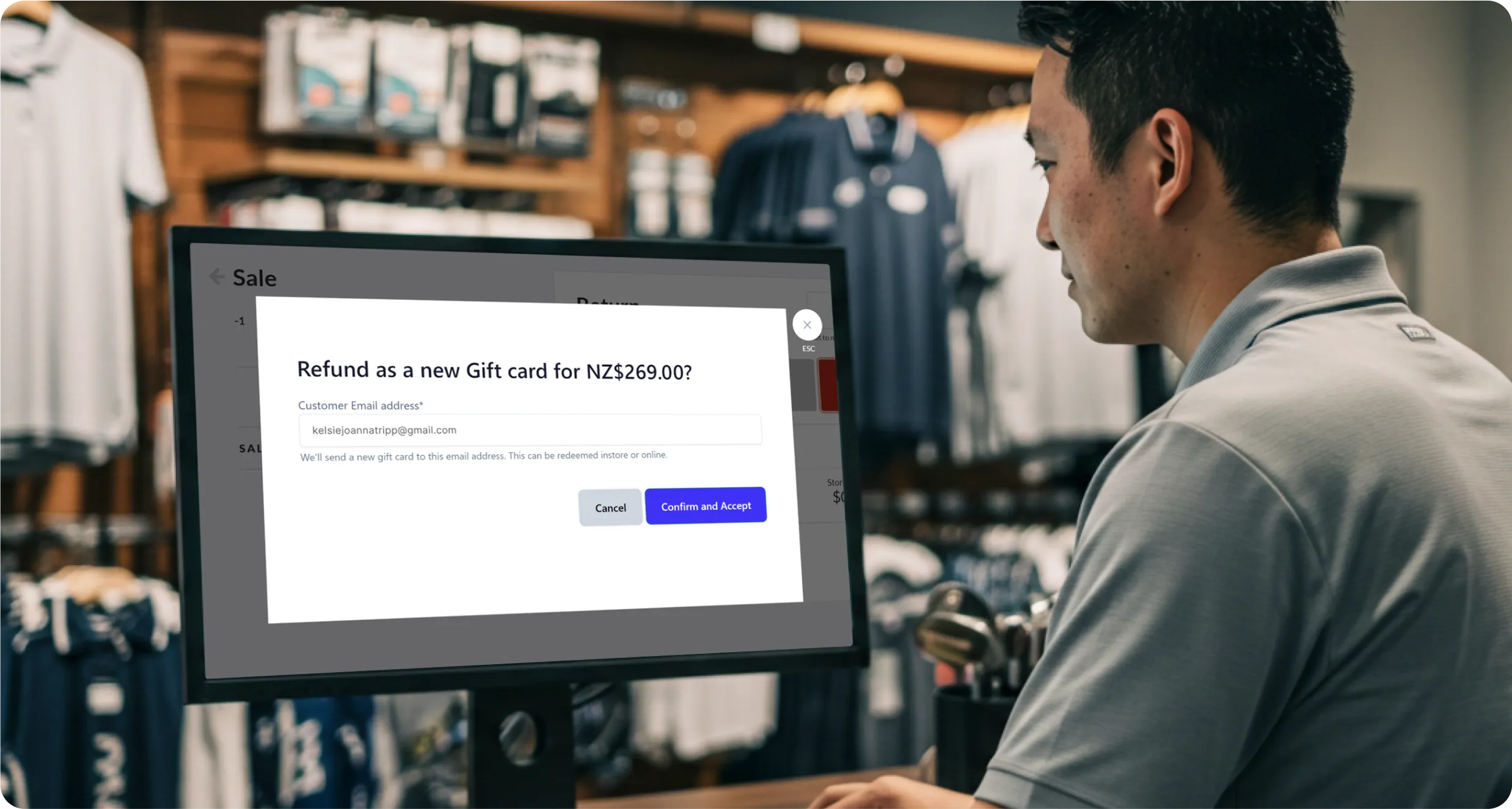
If your current setup cannot issue credit that works across every channel you sell through, that is the constraint to fix first. Everything above depends on it. The feature overview covers how store credit, refund-to-credit and gift cards share one balance in Wrapped.
This is general information for operators, not accounting or legal advice. Check your own consumer law obligations before changing a refund policy.